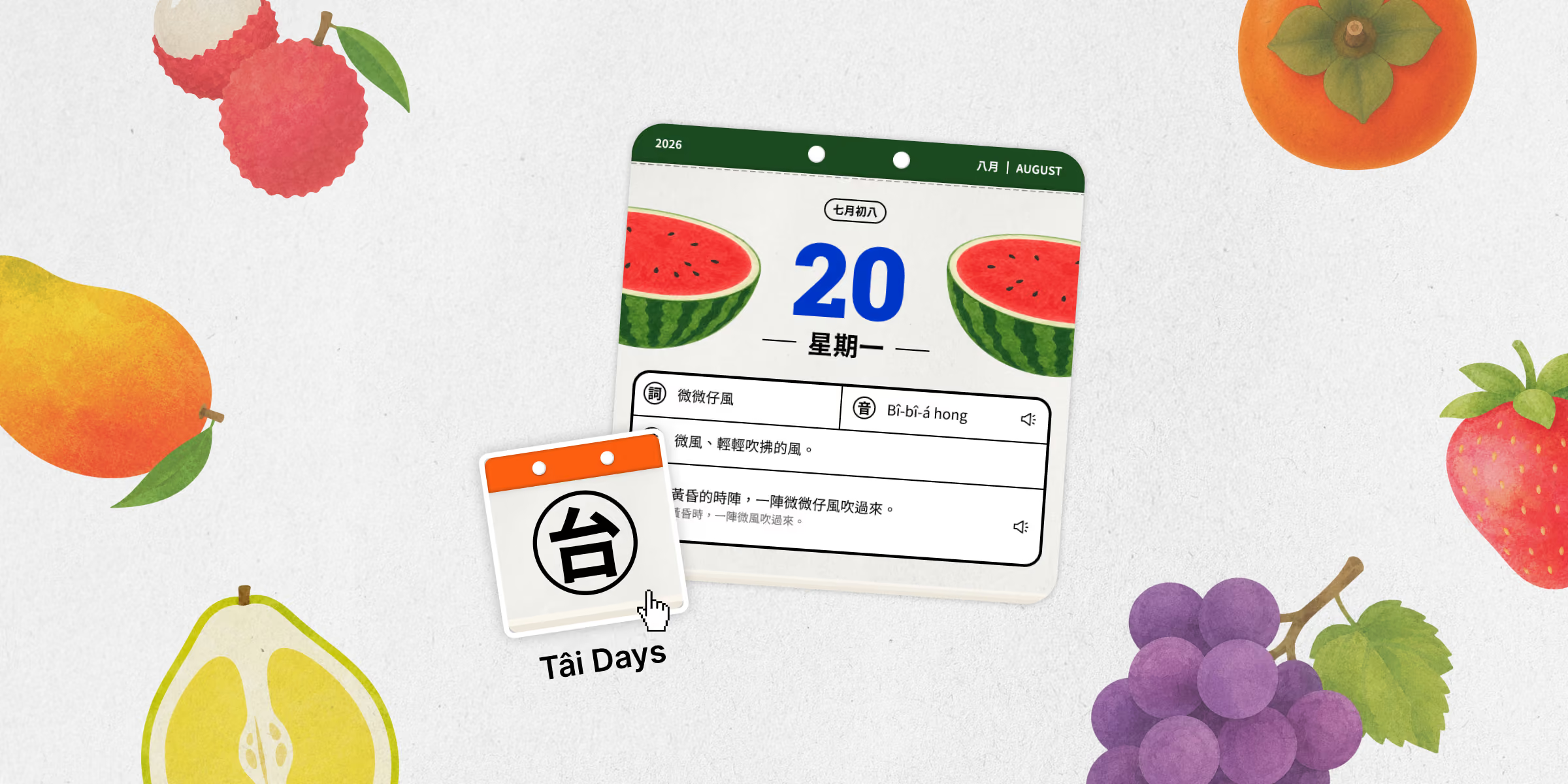

Tâi Days combines seasonal Taiwanese themes, official word audio, and a lightweight content system. I used AI to accelerate content creation, visual design, and prototyping while keeping the final product shaped by human judgment and cultural taste.

Product Builder
Visual Design System
React Prototype
Content Management System
Design Documentation for AI
GitHub Repository
Audio Integration
June 2025 (2 weeks)
Tâi-gí, also known as Taiwanese Hokkien, was once widely spoken in everyday life across Taiwan. For many in my generation, however, it has become less present in daily use. It still carries family memories, local humor, markets, songs, and everyday expressions, but it can feel close without being fully familiar.
Tâi Days started from that gap: a small daily ritual that gently brings Tâi-gí back into everyday life, one word, one sentence, and one cultural moment at a time.
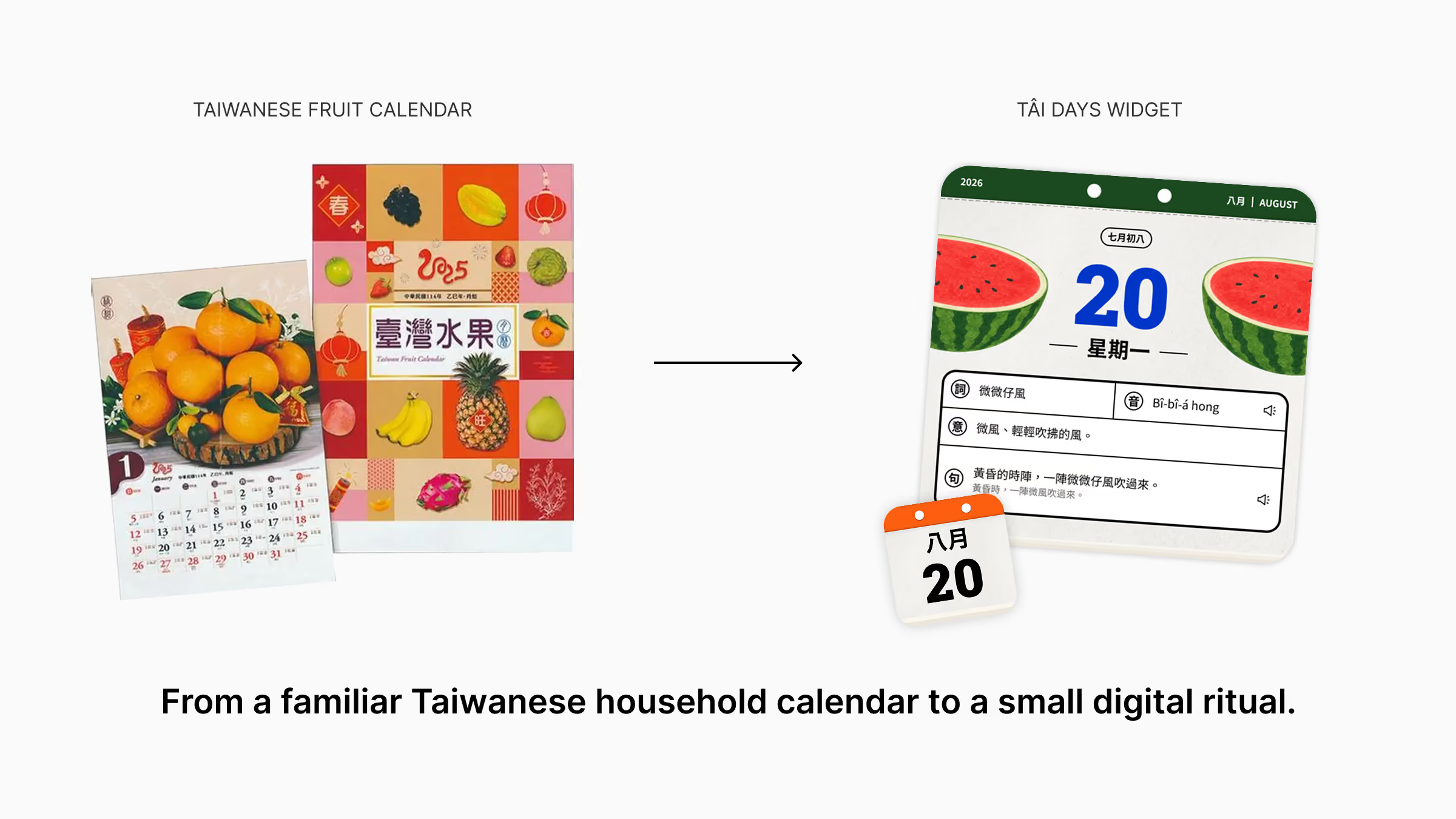
▲ Reference: 2025 Taiwanese fruit wall calendar by 靚彩廣告, featuring monthly seasonal fruit imagery.
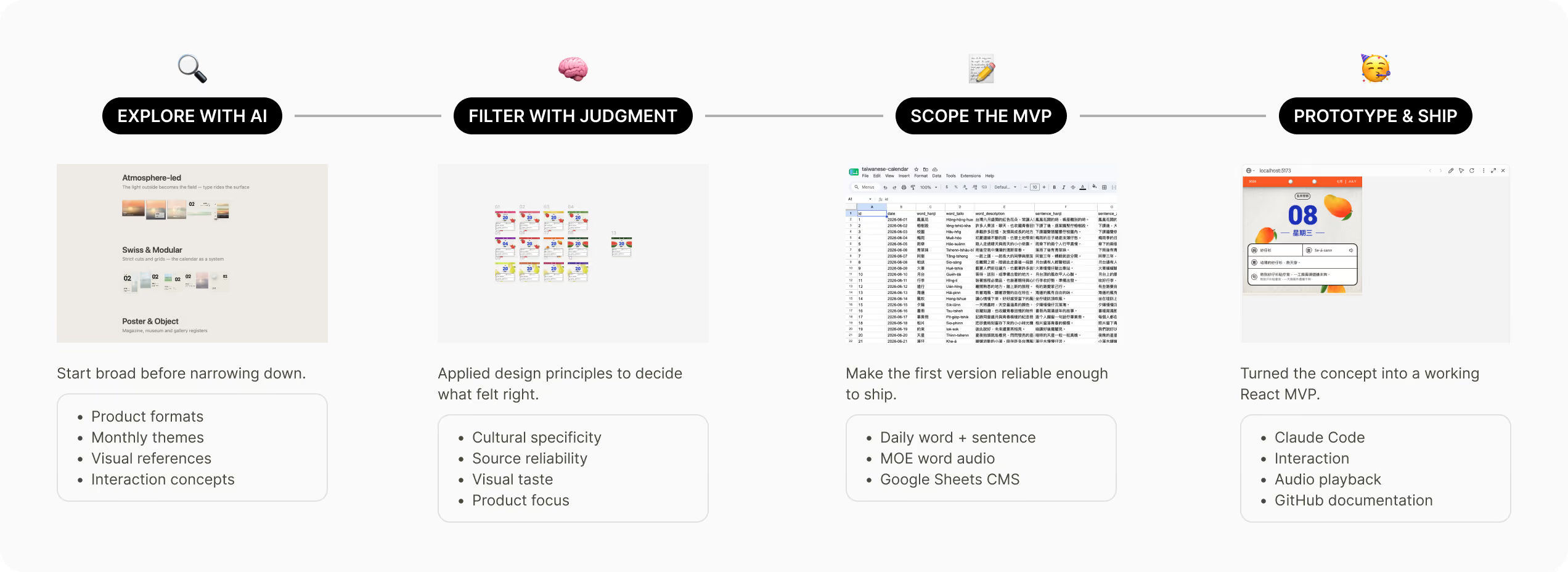
I used AI across the process to move from exploration to a working MVP. The workflow below highlights what I produced at each step, from early directions and design principles to the content system, React prototype, and GitHub documentation.
However, the MVP needed to feel both culturally specific and feasible to build. I focused on two key decisions: choosing a familiar Taiwanese calendar format as the product metaphor, and grounding the language content in trusted pronunciation sources.
A typical learning app treats Tâi-gí as a subject to be studied from scratch. But for my generation, it is already around us. The format needed to carry that closeness.
I chose a tear-off calendar inspired by Taiwanese fruit calendars, so the product feels like rediscovering a familiar daily. With one word a day, no levels, and no streaks, the experience stays intentionally small.
I first prototyped audio with Google TTS, but it did not fully support Tâi-gí pronunciation. Since unreliable audio could teach the wrong sound, I chose not to rely on generated pronunciation for the MVP.
I switched to the Ministry of Education dictionary’s native-speaker recordings and accepted the constraint that not every word would have audio. Therefore, I rebuilt the vocabulary around entries with verified recordings.
A working prototype with tear-off interaction, word audio, and daily Taiwanese content. Feel free to try it below, or explore the project on GitHub if you’d like to run it locally. The current MVP includes content through September.
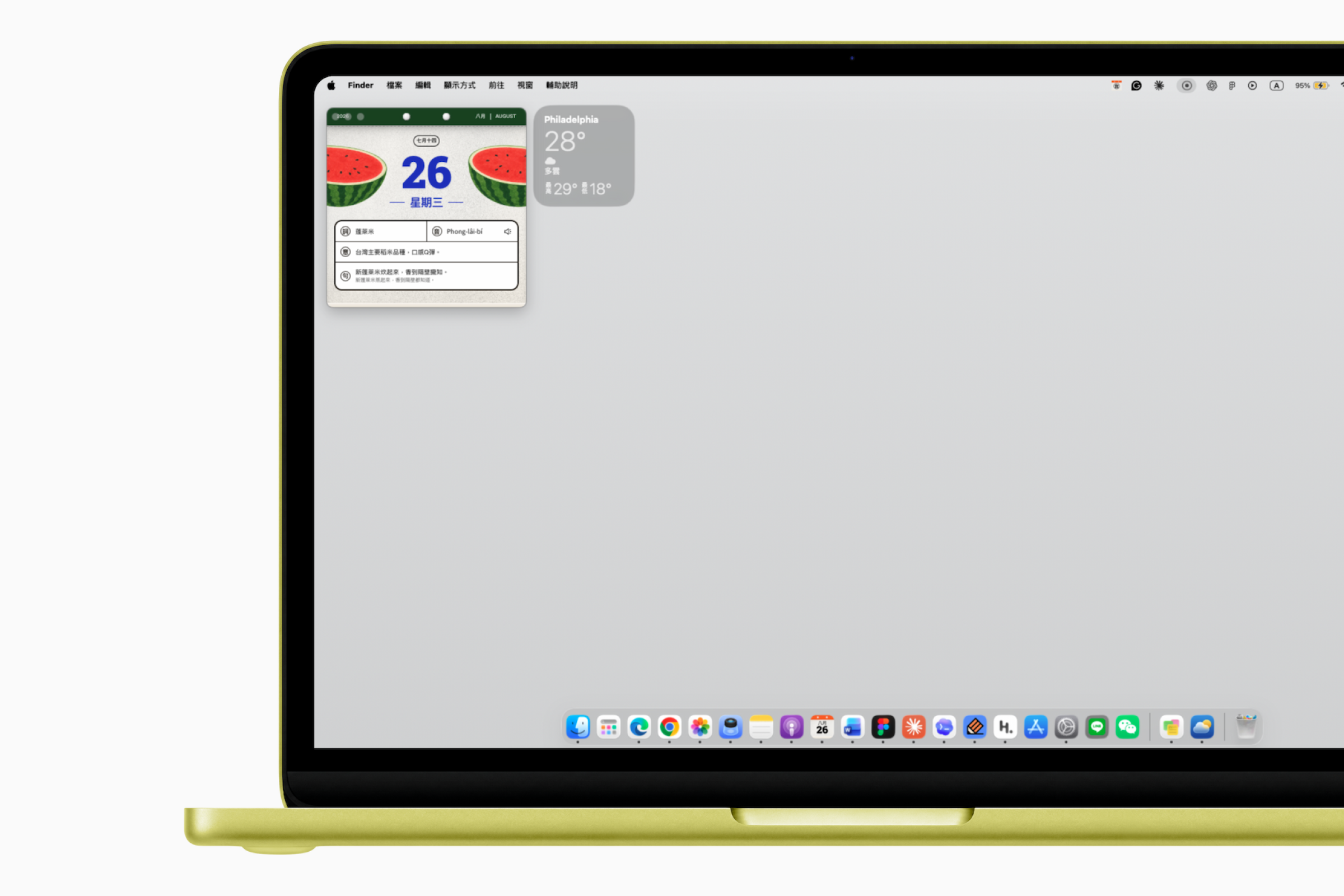
Tear off one page each day to reveal a new Taiwanese word. The interaction turns language learning into a tiny moment users can return to every day.
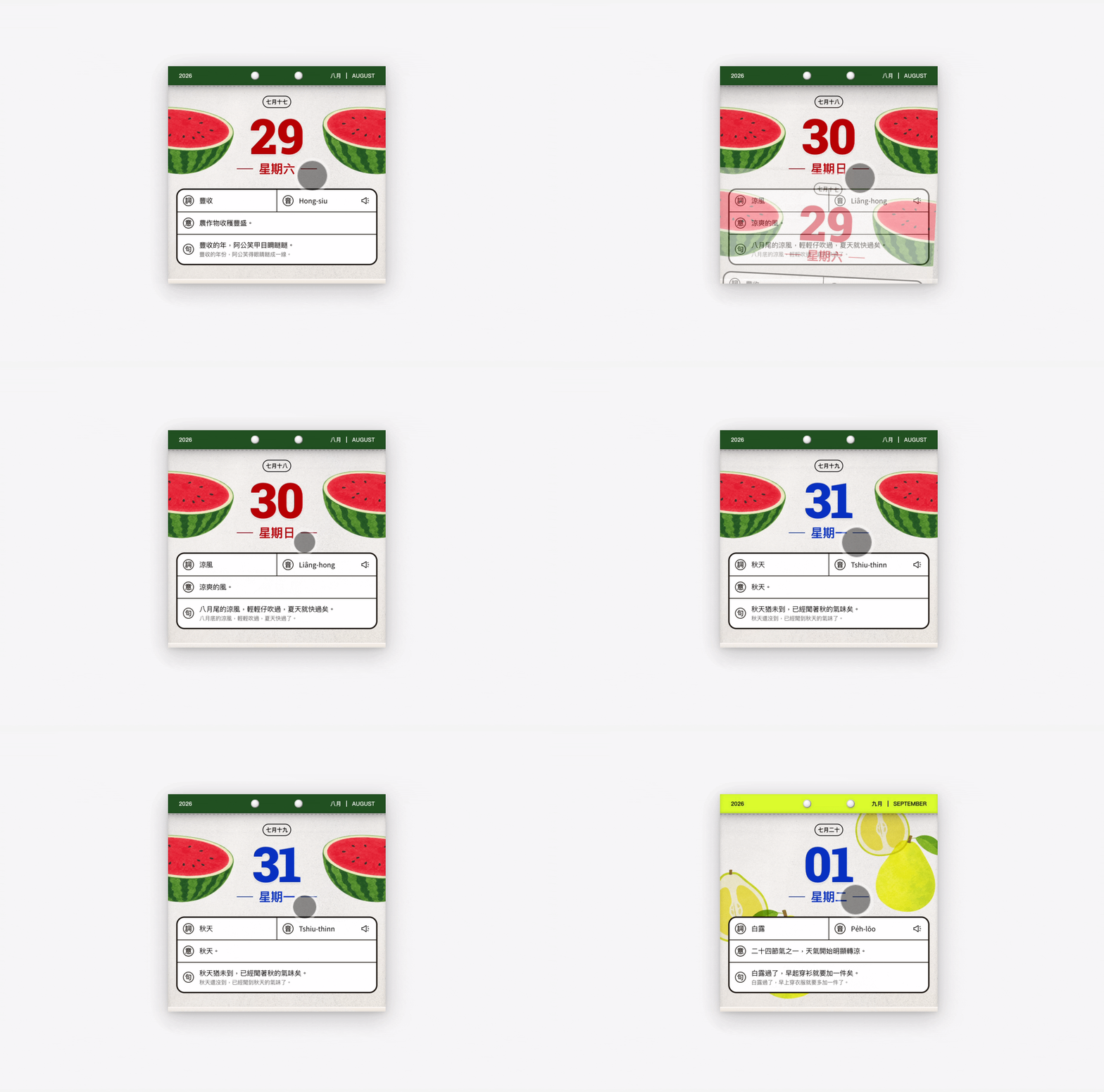
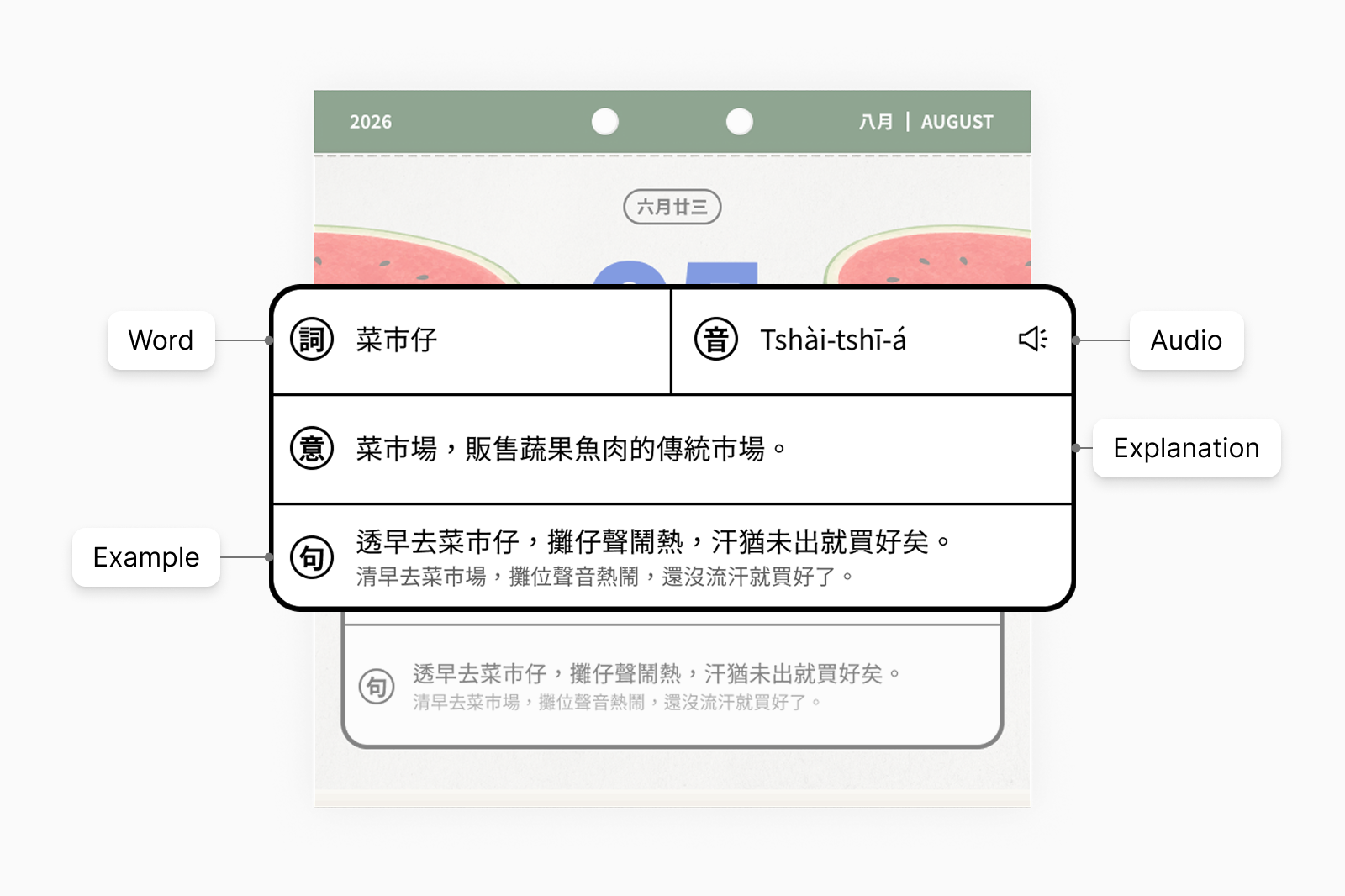
Each day introduces one Tâi-gí word with a short explanation and example sentence, connecting vocabulary to seasonal moments and everyday Taiwanese life.

This project helped me learn how to integrate AI into my design workflow across content, visual exploration, and prototyping. AI was helpful for moving faster and expanding directions, but personally, I think that the final craft still required hands-on design judgment. For detailed visual refinement and layout quality, Figma remained the more reliable space for making precise decisions.

Authentic Tâi-gí TTS is still limited and often requires paid services, so I would first validate user demand before investing in sentence-level audio. If audio proves valuable, the next step would be to explore a reliable, scalable way to support full-sentence pronunciation.
Here is a tiny version of me that knows my work.
